
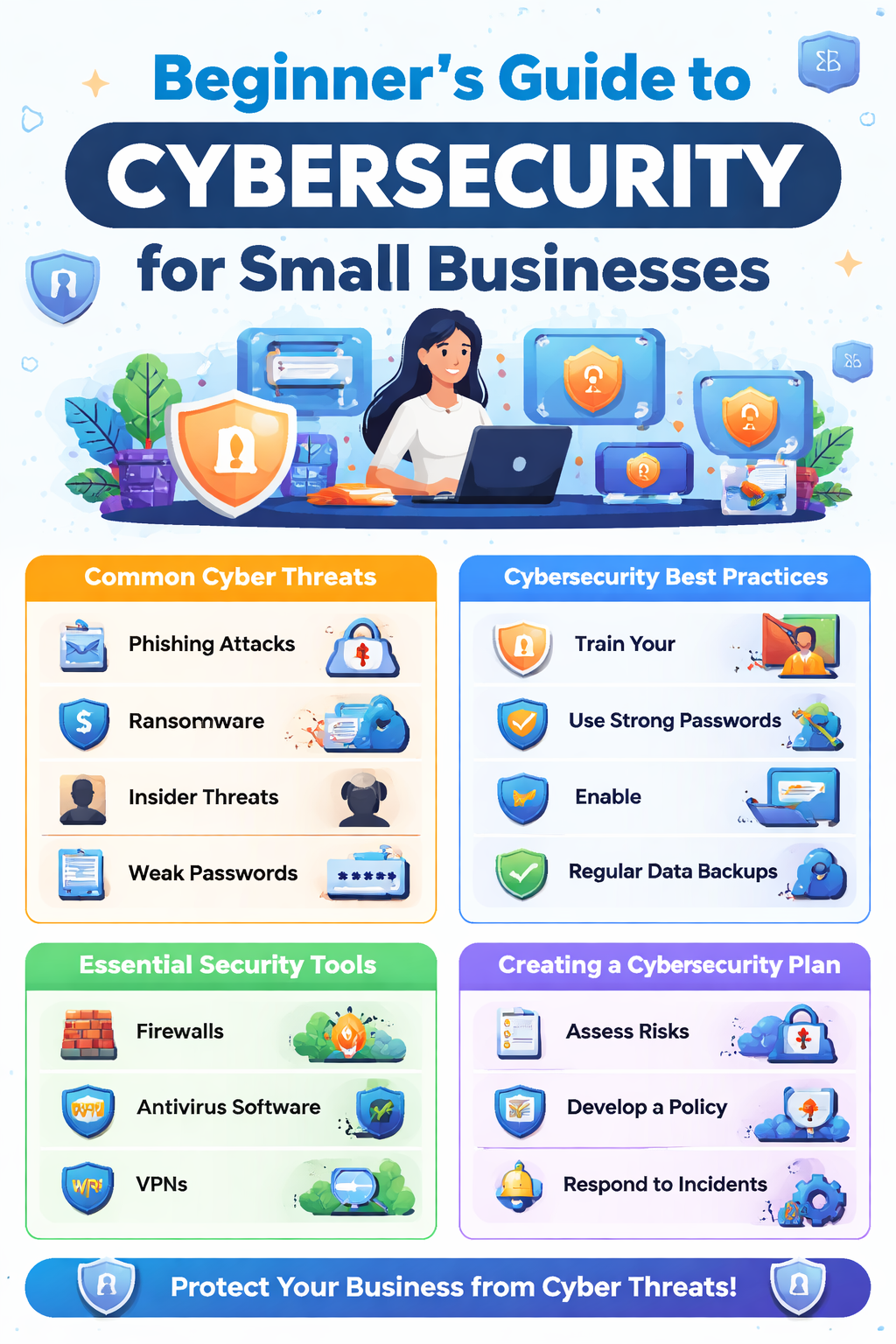

Beginner’s Guide to Cybersecurity for Small Businesses
Introduction to Cybersecurity for Small Businesses
Beginner’s Guide to Cybersecurity for Small Businesses Cybersecurity has become an essential aspect of running a business, regardless of its size. Small businesses, in particular, are often targeted by cybercriminals because they tend to have fewer resources and less sophisticated security measures compared to larger enterprises. Understanding the basics of cybersecurity is the first step in protecting sensitive business data, customer information, and the overall integrity of your operations.
Small business owners must recognize that threats can come in many forms—ransomware, phishing attacks, insider threats, and more. Investing in cybersecurity does not just mean buying software; it involves creating a comprehensive strategy that includes policies, employee training, and continuous monitoring. This guide is designed to equip small business owners with practical knowledge and actionable steps to safeguard their digital assets.
Common Cyber Threats Small Businesses Face,Beginner’s Guide to Cybersecurity for Small Businesses
2.1 Phishing Attacks
Phishing attacks are one of the most common ways cybercriminals attempt to steal sensitive information. These attacks usually come in the form of emails, messages, or websites that appear legitimate but are designed to trick employees into revealing passwords, credit card information, or other confidential data.
2.2 Ransomware
Ransomware is malicious software that encrypts a business’s files and demands payment to restore access. Small businesses are particularly vulnerable because they may not have proper backups or recovery strategies in place.
2.3 Insider Threats
Not all threats come from outside the organization. Employees, contractors, or partners with access to sensitive information can unintentionally—or intentionally—compromise cybersecurity. This makes policies, access controls, and employee awareness training critical.
2.4 Weak Passwords and Authentication
Simple passwords are easy for cybercriminals to guess using automated tools. Implementing strong password policies and multi-factor authentication can significantly reduce risk.
Cybersecurity Best Practices for Small Businesses
3.1 Develop a Cybersecurity Policy
A well-defined cybersecurity policy provides guidance on how employees should handle sensitive information, use company devices, and respond to potential threats.
3.2 Employee Training and Awareness
Employees are often the first line of defense against cyber threats. Regular training sessions on recognizing phishing emails, avoiding suspicious downloads, and following security protocols can drastically improve overall security.
3.3 Implement Firewalls and Antivirus Software
A strong firewall and up-to-date antivirus software can block malicious traffic and detect threats before they cause damage. Choosing solutions appropriate for your business size and network complexity is crucial.
3.4 Regular Data Backups
Regularly backing up important business data ensures that in the event of a cyberattack, files can be restored without paying ransoms or losing valuable information.
3.5 Keep Software and Systems Updated
Outdated software often contains vulnerabilities that cybercriminals exploit. Regularly updating operating systems, applications, and plugins closes these gaps and strengthens security.
3.6 Secure Wi-Fi Networks
Unsecured Wi-Fi networks are an open invitation for hackers. Use strong encryption, unique passwords, and hide your network from public access whenever possible.
3.7 Monitor and Respond to Threats
Continuous monitoring of systems and networks can help detect unusual activity early. Establishing a response plan for cyber incidents ensures quick action to minimize damage.
As your business expands, cybersecurity needs become more complex. Small businesses approaching growth must consider the following:
- Cloud Security: Using cloud services introduces additional risks that require careful access control, encryption, and vendor vetting.
- Third-Party Vendor Management: Ensure that all partners, suppliers, and contractors follow strict security standards to prevent indirect breaches.
- Compliance and Legal Requirements: Depending on your industry, there may be legal obligations for protecting customer data (e.g., GDPR, CCPA, HIPAA).
By integrating advanced cybersecurity measures early, growing businesses can protect themselves from threats that could otherwise compromise their operations and reputation.
Creating a Cybersecurity Culture in Your Business,Beginner’s Guide to Cybersecurity for Small Businesses
Building a culture of cybersecurity is just as important as technical defenses. Encourage a mindset where every employee understands their role in protecting company data. Practices include:
- Rewarding employees for reporting potential threats.
- Encouraging transparency when mistakes happen.
- Regularly reviewing and updating policies to keep up with evolving threats.
A proactive culture ensures that security isn’t just the IT department’s responsibility but a shared priority across the organization.
Resources and Tools for Small Business Cybersecurity
- Password Managers: Tools like LastPass or 1Password help generate and store strong passwords securely.
- Security Awareness Training: Services such as KnowBe4 or Cofense offer interactive phishing and security training for employees.
- Backup Solutions: Cloud-based backup providers like Backblaze or Acronis ensure critical data is safe.
- Cybersecurity Frameworks: Following NIST or ISO standards provides a structured approach to protecting business information.
By leveraging these tools and continuously learning about new threats, small businesses can maintain a robust cybersecurity posture without needing an extensive IT department.
Cybersecurity is no longer optional for small businesses—it is essential. While the threats are real and evolving, understanding the fundamentals and implementing best practices can drastically reduce risk. Start by assessing your current security posture, train your employees, and implement strong technical safeguards.
By following the guidance in this beginner’s guide, small businesses can protect their data, safeguard customer trust, and ensure long-term operational resilience in an increasingly digital world.
Eeyyee, amma ani barreeffama kana dheeressuu fi SEO-friendly gochuu dabalatee, meta description, meta social description, fi link amanamaa waliin qopheessa. Kanaaf, barreeffamni keessan akka website ykn blog irratti bu’a qabeessa ta’u danda’a.
Cybersecurity for Small Businesses
Cybersecurity is a fundamental requirement for small businesses in today’s digital world. Cybercriminals often target smaller companies because they may lack robust security measures. Protecting sensitive information—such as customer data, financial records, and intellectual property—is crucial to maintaining trust and business continuity.
Many small business owners underestimate the importance of cybersecurity, believing that their company is too small to attract hackers. In reality, over 43% of cyberattacks target small businesses, making them highly vulnerable. A proactive approach that combines employee education, software solutions, and risk management is key to preventing breaches.
Understanding Cybersecurity Risks
2.1 Phishing and Social Engineering Attacks
Phishing attacks involve deceptive emails, phone calls, or websites designed to trick employees into revealing sensitive information. Social engineering manipulates human behavior, which can be more dangerous than software-based attacks.
2.2 Ransomware Threats
Ransomware encrypts business data and demands payment for its release. Without proper backups, small businesses may face permanent data loss.
2.3 Insider Threats
Not all threats come from outside. Employees with malicious intent—or who make mistakes—can compromise business security. Implementing strict access controls, monitoring, and employee training reduces insider risk.
2.4 Weak Passwords and Authentication Practices
Passwords like “123456” or “password” are extremely vulnerable. Businesses should enforce strong password policies and implement multi-factor authentication (MFA) wherever possible.
2.5 Third-Party Vendor Vulnerabilities
Partners or vendors may have access to your business data. If their security is weak, it can create a backdoor for attackers. Always assess vendors’ cybersecurity practices.
Implementing Core Cybersecurity Measures
3.1 Develop a Comprehensive Cybersecurity Policy
A written policy provides guidelines for employees on handling sensitive information, using company devices, and responding to threats.
3.2 Employee Training and Awareness
Employees must recognize phishing emails, avoid suspicious downloads, and report potential threats. Regular training sessions reduce human error, which accounts for the majority of breaches.
3.3 Install Firewalls and Antivirus Software
Firewalls control incoming and outgoing network traffic, while antivirus software detects and neutralizes malware. Choose solutions that scale with your business.
3.4 Regular Data Backup and Disaster Recovery
Back up critical files both onsite and offsite. Cloud-based backup solutions can ensure business continuity during attacks.
3.5 Software and System Updates
Patching operating systems, applications, and plugins closes vulnerabilities that hackers exploit. Regular updates are crucial.
3.6 Secure Wi-Fi Networks
Use WPA3 encryption, strong passwords, and hidden SSIDs to secure business Wi-Fi networks.
3.7 Network Monitoring and Incident Response
Continuous monitoring allows early detection of suspicious activity. Establish an incident response plan to act quickly in case of a breach.
Advanced Strategies for Growing Businesses
4.1 Cloud Security Best Practices
Cloud computing offers flexibility but also introduces new risks. Encrypt sensitive data, manage permissions carefully, and choose reputable cloud providers.
4.2 Compliance with Regulations
Many industries have legal requirements for data protection, such as GDPR, HIPAA, or CCPA. Ensure your business complies to avoid legal penalties.
4.3 Cybersecurity Insurance
Insurance can provide financial protection in the event of a cyberattack. Evaluate policies to ensure they cover data breaches, ransomware, and other digital threats.
Fostering a Cybersecurity Culture
- Make security a shared responsibility across the organization.
- Encourage employees to report suspicious activity without fear of penalties.
- Reward proactive security behavior and maintain transparency.
- Update security protocols regularly to keep up with evolving threats.
A strong cybersecurity culture complements technical measures and reduces overall risk.
Tools and Resources for Small Business Cybersecurity
- Password Managers: LastPass, 1Password
- Security Awareness Training: KnowBe4, Cofense
- Backup Solutions: Backblaze, Acronis
- Cybersecurity Frameworks: NIST Cybersecurity Framework, ISO 27001
Utilizing these tools improves your business’s resilience against cyber threats.
Cybersecurity is critical for small businesses. By understanding common threats, implementing security measures, training employees, and leveraging the right tools, small business owners can significantly reduce risk. Protecting digital assets is an ongoing process that requires vigilance, updates, and a proactive mindset.
Taking cybersecurity seriously ensures not only the safety of business data but also the trust of your customers and partners, laying the foundation for sustainable growth.
Meta Description (SEO-Friendly)
Learn essential cybersecurity tips for small businesses. Protect your data from phishing, ransomware, and insider threats with practical strategies and tools.
Meta Social Description
Small business cybersecurity made simple. Discover how to safeguard your data, train employees, and prevent cyberattacks effectively.
External References / Trusted Links
- Small Business Cybersecurity Guide - NIST
- Cybersecurity Tips for Small Businesses - CISA
- Ransomware Guidance - FBI
:-World Cybersecurity Threats for Small Businesses
2.6 Case Study: Phishing Attack Impact
In 2022, a small retail company in the U.S. lost over $150,000 due to a phishing scam. An employee unknowingly clicked a link in a seemingly legitimate email from a supplier, giving hackers access to the company’s bank account. This case highlights the importance of regular employee training and verifying unusual requests.
2.7 Data Breaches in Small Businesses
Data breaches often make headlines for large corporations, but small businesses experience them too. According to a report by Verizon, 28% of data breaches in 2021 involved small businesses. Compromised data can include customer information, payment card data, and confidential contracts.
2.8 Social Media Exploitation
Cybercriminals exploit weak social media security. Hackers can impersonate your business profile to trick customers into making payments or providing personal information. Small businesses should monitor social media accounts, enforce strong password policies, and educate employees about safe online practices.
Advanced Cybersecurity Practices
3.8 Implement Multi-Factor Authentication (MFA)
Multi-factor authentication adds an extra layer of security beyond passwords. Employees must verify their identity using a secondary method such as an authentication app or SMS code. MFA significantly reduces the chances of unauthorized access.
3.9 Encrypt Sensitive Data
Encryption converts data into code, making it unreadable to unauthorized users. Encrypting files, emails, and communications ensures that even if data is stolen, it remains protected.
3.10 Use Virtual Private Networks (VPNs)
VPNs secure internet connections by encrypting data transmitted over public or shared networks. Employees working remotely should always use a VPN to protect sensitive business information.
3.11 Regular Cybersecurity Audits
Conducting regular audits helps identify vulnerabilities before they are exploited. Audits can be internal or performed by third-party cybersecurity experts. They evaluate system configurations, software updates, employee compliance, and network security.
3.12 Incident Response Simulations
Simulating a cyberattack prepares your team for real threats. Tabletop exercises or live simulations help employees understand their roles, streamline communication, and minimize downtime during an actual breach.
: Cybersecurity Investment and Budgeting
Small businesses often hesitate to invest in cybersecurity due to cost concerns, but the financial consequences of breaches are far greater.
- Budget Allocation: Set aside 5-10% of IT spending specifically for cybersecurity.
- Cost-Benefit Analysis: Compare the cost of preventive measures versus potential losses from cyberattacks.
- Software Subscriptions vs One-Time Purchases: Consider subscription-based solutions for antivirus, firewalls, and monitoring tools to ensure regular updates and support.
Investing in cybersecurity is an investment in business continuity, customer trust, and legal compliance.
Cybersecurity for Remote Work
Remote work introduces unique risks for small businesses. Employees may use personal devices, unsecured Wi-Fi, or share devices with family members. Implementing the following measures can help mitigate these risks:
- Secure Device Policies: Require company-issued devices or enforce security software on personal devices.
- VPN Requirement: All remote employees should connect through a VPN.
- Regular Security Training: Provide continuous education on remote security threats, such as phishing via messaging apps or video conferencing scams.
- Access Control: Limit access to sensitive systems based on job roles and responsibilities.
Cloud Security Essentials
Many small businesses rely on cloud services for storage, collaboration, and software access. Cloud environments are convenient but must be secured properly:
- Data Encryption: Encrypt sensitive files both at rest and in transit.
- Strong Authentication: Implement MFA and role-based access control for cloud platforms.
- Vendor Security Assessment: Verify that cloud providers comply with industry security standards.
- Regular Backups: Even cloud-stored data should be backed up to prevent accidental loss or ransomware attacks.
Protecting Customer Data
Customer trust is critical for small businesses. Protecting personal and payment information require
Final Conclusion
Cybersecurity for small businesses is no longer optional—it is a fundamental requirement in today’s digital economy. As technology continues to evolve, cyber threats are becoming more sophisticated and frequent. Small businesses must recognize that they are not immune to cyberattacks. In fact, many attackers deliberately target smaller organizations because they often lack advanced security defenses.
Throughout this guide, we explored the key elements of cybersecurity for small businesses. These include understanding common cyber threats such as phishing, ransomware, insider threats, and weak authentication practices. Recognizing these risks is the first step toward building a stronger security posture.
We also discussed essential cybersecurity practices such as implementing firewalls, antivirus software, strong password policies, multi-factor authentication, regular data backups, and secure network configurations. These technical safeguards form the backbone of any effective cybersecurity strategy.
However, technology alone is not enough. Human awareness plays a critical role in protecting business systems and data. Employee training, clear cybersecurity policies, and a culture of security awareness can significantly reduce the likelihood of successful cyberattacks. When employees understand how to identify suspicious emails, protect sensitive information, and report security incidents, they become an essential part of the organization’s defense system.
Another important factor is planning and preparedness. Businesses should develop incident response plans, disaster recovery strategies, and regular security audits. These steps ensure that if an attack does occur, the organization can respond quickly, minimize damage, and restore operations efficiently.
Cloud services, remote work environments, and third‑party partnerships have also introduced new security challenges. Small businesses must carefully evaluate cloud providers, secure remote connections using VPNs, and ensure that vendors follow proper cybersecurity standards. Protecting customer data and maintaining privacy should always remain a top priority.
Investing in cybersecurity is ultimately an investment in the long‑term stability and reputation of the business. Data breaches can result in financial loss, legal consequences, and damage to customer trust. On the other hand, strong cybersecurity practices demonstrate professionalism, reliability, and commitment to protecting stakeholders.
Small businesses do not need extremely complex systems to achieve good security. By implementing practical measures, using reliable security tools, and continuously improving policies and training programs, even small organizations can significantly reduce their risk.
Cybersecurity should be viewed as an ongoing process rather than a one‑time project. Threats will continue to evolve, and businesses must remain vigilant by regularly updating systems, reviewing security policies, and educating employees.
In the end, the most successful businesses are those that combine technology, awareness, planning, and continuous improvement. By following the guidance presented in this beginner’s guide, small business owners can build a resilient cybersecurity foundation that protects their operations, customers, and future growth.
Tools to Track Website Analytics and Improve Performance
Akkamitti Blog Maallaqa Dhugaa Fidu Jalqabuu Dandeessa (2026) – Qajeelfama Guutuu Beginner’s Guide